

By Erica Marie Coston, C.H.
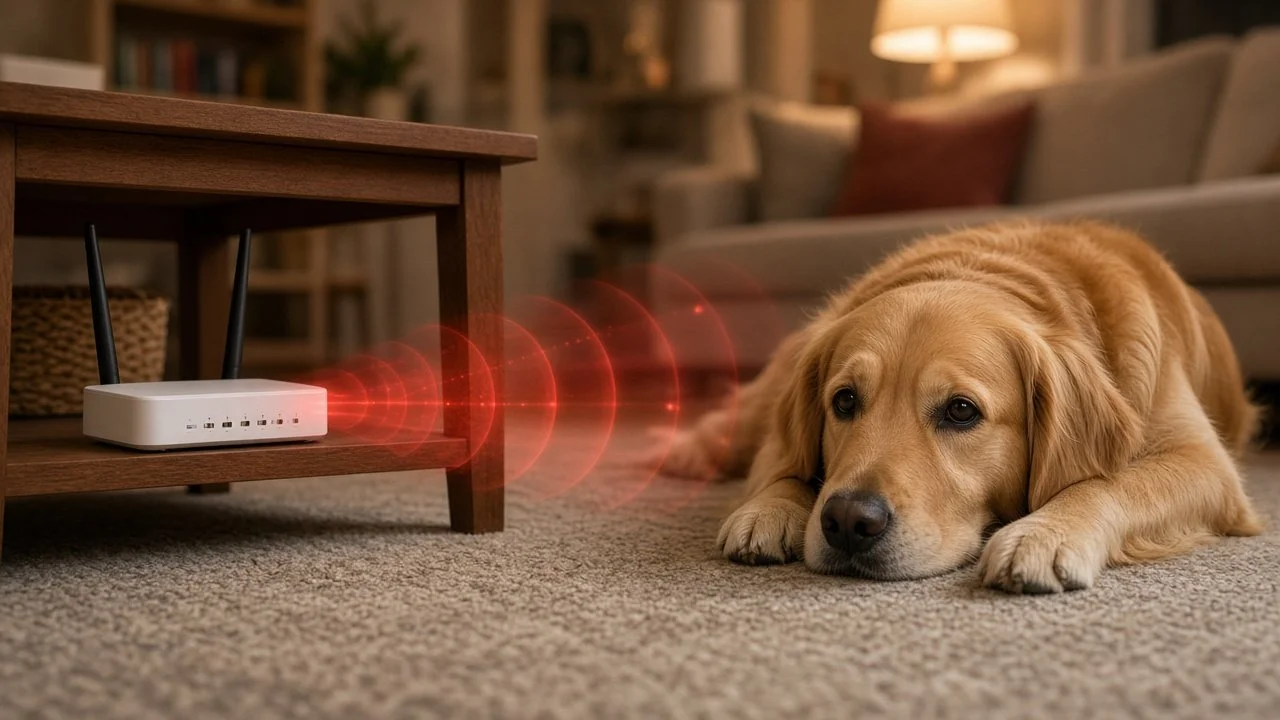
Your dog can't tell you that the Wi-Fi router humming beside their bed is wearing on them. They can't pick where the smart meter goes or ask you to put your phone down during cuddle time. As their guardian, you get to make those choices for them. This article covers what electromagnetic fields (EMFs) are, how 5G differs from earlier wireless technology, how this radiation can affect your pet's body, and, most importantly, the natural, practical steps you can take to protect them.
EMFs Explained
To understand 5G, it helps to start with the bigger picture of electromagnetic energy.
Electromagnetic fields, or EMFs, have been around longer than human beings. EMFs vary in frequency, the number of waves passing through a fixed point per second, measured in hertz (Hz).
Natural and man-made EMFs are distinguished by where their frequency falls on the EMF spectrum: nonionizing versus ionizing, and low to high. Natural EMF sources, such as sunlight and lightning, differ in frequency from man-made sources, such as electrical wiring and cell phones.
Ionizing radiation has higher frequencies. It destroys atomic structure by knocking off one or more electrons, transforming previously neutral atoms into positively charged ions. These ions produce free radicals, which damage the body's cells. X-rays, for example, are ionizing radiation and damage DNA.
Nonionizing radiation, once regarded as safe, doesn't carry enough energy to create ions. Research now shows that nonionizing radiation isn't safe after all; it causes biological damage through a different mechanism than ionizing radiation. In fact, one study showed that low-intensity radio frequency EMF at 1.8 GHz produced more DNA breaks than 1,600 chest x-rays (as cited in Mercola, 2020).
Why it matters: "Nonionizing" doesn't mean "harmless," and that's the key to understanding why 5G deserves our attention.
5G Explained
With that foundation, let's look at what makes 5G different from the wireless technology that came before it.
Fifth generation (5G) technology is considered nonionizing radiation and uses radio frequency (RF). It's the latest wireless technology and the strongest frequency telecommunication companies have used yet, jumping from radio frequencies of 6 GHz or less to 24–60 GHz or more. 5G uses millimeter waves (MMWs), which provide a larger bandwidth, meaning they carry more data at faster speeds with shorter wait times.
Because MMWs are easily blocked by physical structures such as buildings and walls, they require more antennas, placed closer together, than older technologies. Rather than replacing 3G and 4G, 5G exists in addition to them, surrounding your pet with more, and stronger, man-made radio waves than ever before. In addition, low-orbit satellites have been launched, blanketing the entire Earth in an MMW radiation field.
Higher frequencies may also change how much energy small creatures absorb. A 2018 computer-modeling study in Scientific Reports built 3D models of four insect types and found that all of them absorbed more RF power at and above 6 GHz than below it. The researchers calculated that shifting 10% of the incident power to frequencies above 6 GHz would increase the power the insects absorb by 3–370% (Thielens et al., 2018). This was a simulation of absorbed energy, not a measurement of harm, but it shows why the move toward 5G frequencies deserves study.
Wildlife researchers have raised similar concerns. A major 2022 review of nonhuman species reported that biological effects have been seen across all taxa and frequencies at very low intensities comparable to today's ambient exposures, including effects on orientation and migration, food finding, reproduction, nest and den building, and survivorship. The authors called for ambient EMF to be recognized as a novel form of pollution (Levitt, Lai & Manville, 2022). In Valladolid, Spain, one field study counted house sparrows at 30 points between 2002 and 2006 and found significantly lower bird density in areas with higher electric field strength from phone antennas (Balmori & Hallberg, 2007). This was an observational study: it shows a correlation, and the authors noted other factors may also be involved.
5G Radiation Sources in Your Home
Many of the biggest sources of exposure are the everyday devices we rarely think twice about:
Cell phones
Laptops
Tablets
Wi-Fi routers
Smart electric, gas, and water meters
Cordless baby monitors
Smart alarm systems ("smart" anything)
Amazon's Alexa
Google Home
Tip: Walk through your home and note where each of these sits in relation to your pet's favorite resting spots. Pets often choose warm places, like the floor beside a router or the wall behind a smart meter, so a simple map of "devices vs. dog beds" is a great first step.
How 5G Nonionizing Radiation Damages Your Pet
Now that you know where exposure comes from, here's what happens inside your pet's body.
5G, Electrolyte Balance and Oxidative Stress
Low-intensity, nonionizing EMF exposure opens voltage-gated calcium channels (VGCCs). The extra calcium rushing into cells from 5G exposure triggers the release of stored nitric oxide, increasing nitric oxide levels inside your pet's cells.
Inside the cell, nitric oxide combines with superoxide, another free radical that increases with excess cellular calcium, to form peroxynitrite. Over time, peroxynitrite causes substantial oxidative damage and disrupts important cell signaling pathways, damaging the mitochondria. Oxidative stress causes accelerated aging.
5G, Brain and Heart Health
Your pet's brain, heart and reproductive organs are impacted the most by EMF exposure, because their tissues have the highest concentrations of VGCCs and rely on calcium more than other organs to regulate function.
This calcium-channel mechanism comes from biochemist Martin Pall's 2013 review, which reported that 23 studies showed EMF effects were blocked or greatly lowered by calcium channel blockers, and proposed the nitric oxide–peroxynitrite–oxidative stress pathway described above as a cause of harmful effects (Pall, 2013). This remains a proposed mechanism that other scientists continue to debate.
The National Toxicology Program (NTP) of the National Institutes of Health found "clear evidence of carcinogenic activity in the schwannoma cells of the heart and some evidence of an association with malignant gliomas in the brain."
University of Washington scientists found DNA breaks in laboratory animals' brain cells resulting from radiation exposure (Lai et al., 1995, as cited in The BabySafe Project).
What the large animal studies found. In 2018, the NTP finished two-year studies exposing rats and mice to cell phone radio frequency radiation (2G and 3G frequencies, not 5G). High exposure at 900 MHz was associated with clear evidence of malignant schwannomas in the hearts of male rats, and some evidence of malignant gliomas in the brain and of adrenal gland tumors in male rats. Heart cancer was seen in about 2% of rats exposed at a lower level and 5–6% of rats at a higher level, four times the maximum human exposure. A follow-up analysis linked exposure to significant increases in DNA damage in the brains of male mice and male rats. The NTP itself cautions that results in female rats and in mice were unclear and that its findings should not be directly extrapolated to people (National Toxicology Program, 2018).
That same year, Italy's Ramazzini Institute published the largest long-term rat study of its kind, with 2,448 animals exposed from before birth until natural death to a 1.8 GHz field like that from cell tower base stations, for 19 hours a day. Male rats at the highest dose (50 V/m) had a statistically significant increase in heart schwannomas. Female rats at that dose showed more malignant brain tumors, though that increase was not statistically significant. The authors concluded their results were consistent with the NTP findings (Falcioni et al., 2018). These were laboratory rats, not dogs; no comparable long-term studies have been done in pets. Still, they are among the strongest animal evidence available.
From my own practice: over the past eight years, I've noticed a pattern in the clinic. Many of the dogs I see with mast cell tumors who have no history of taking Apoquel (the most common cause I see of MCTs) share one habit: they spend most of the day sleeping right next to a Wi-Fi router. This is a clinical observation, not a controlled study, and it may be coincidence, but it's one of the reasons I encourage every dog guardian to move pet beds away from routers.
5G and Oxygen
Oxygen molecules oscillate at 60 GHz. At 60 GHz, 98% of transmitted 5G energy will be absorbed by atmospheric oxygen, altering the orbital properties of oxygen molecules' shared electrons and disrupting their attachment to hemoglobin and myoglobin (oxygen-carrying molecules). This disruption interferes with the cell's powerhouse, the mitochondria, receiving oxygen. Without oxygen, the liver becomes congested and the body, and brain, begin breaking down due to slow suffocation.
5G, the Endocrine and Nervous Systems
5G affects hormone levels and neurotransmitters, disrupting the entire endocrine system. Your pet relies on their endocrine system (click here to read more on the endocrine system) for overall health, from skin and coat to mood regulation.
5G radiation exposure puts your pet into a sympathetic nervous system state, the stress response known as "fight or flight." While in a sympathetic state, systemic inflammation thrives and healing cannot occur. Radiation damage is cumulative: the longer exposure persists and the longer your pet remains in the sympathetic state, the greater the biological damage.
Why it matters: Because the damage builds over time, small daily changes add up. Every hour your pet spends in a lower-exposure, relaxed state is an hour their body can spend repairing.
5G Radiation Poisoning Symptoms
Knowing the signs helps you connect the dots if your pet seems "off." 5G can present the following symptoms in your pet:
Cataracts
Leaky gut
SIBO (small intestinal bacterial overgrowth)
Anxiety
Hyperactivity
Noise phobias
Strokes
Confusion and/or memory loss
Cardiac arrhythmia
Skin itch/rash/burning and/or tingling
Fatigue and muscle weakness
Dizziness
Ear pain
Paralysis
Seizures
Anger
Low iron levels
Low potassium levels
Decreased immunity
Many of these symptoms have other possible causes too, so always have new or worsening symptoms checked by your veterinarian.
Pets at Risk
Pets without EMF sensitivity remain vulnerable to damage. Pets prone to EMF sensitivity, and at higher risk for EMF's negative effects, include growing puppies and geriatric dogs, as well as those with the following:
Impaired immune function
Lupus
Bacterial or parasitic infections (example: Lyme)
Cancer (brain cancer has the most conclusive association with EMF exposure)
Heart disease
Epilepsy
Chronic anxiety
If your dog falls into one of these groups, the protective steps below are especially worth prioritizing.
Protecting Your Pet From 5G Poisoning
The good news: nature offers powerful tools for supporting your pet's resilience. Here's where to begin.
Increase Daily Exercise and Outside Time
Getting your pet's four paws on the Earth's ground, whether grass, sand or dirt, for at least 30 minutes daily normalizes the EMFs within their body, reconnecting them with the Earth's healing voltage. Chronic RF exposure from cell phones, computers, TVs and Wi-Fi routers depletes your pet's cellular energy. Earth contact neutralizes positively charged free radicals, decreasing oxidation and inflammation.
5G forces the body into a constant sympathetic (stress) nervous system state, while outdoor ground contact calms the nervous system, helping your pet enter the parasympathetic (relaxed) state.
Tip: Leave your phone at home or switch it to airplane mode for these outings. It turns your walk into true downtime for both of you.
Consider Molecular Hydrogen
Calcium flooding cells from 5G exposure disrupts the delicate potassium-calcium balance, triggering excessive NOX activation, which continuously signals cellular defenses against infections (even when no infection is present).
Molecular hydrogen inhibits NOX activation. It diffuses into cells, protecting their structure and lowering NOX levels when they're excessively activated.
Several animal studies show molecular hydrogen's effectiveness in increasing resilience and mitigating inflammation and the effects of acute and chronic stress created by 5G exposure (as cited in Mercola, 2020).
Molecular hydrogen sources include hydrogen tablets and hydrogen water bowls (antioxidant pet water bowls).
Increase NAD+
Increasing nicotinamide adenine dinucleotide (NAD+), a critical cellular coenzyme, helps the body repair 5G EMF exposure damage by fueling poly (ADP-ribose) polymerase (PARP) enzymes. PARP's roles include cell transcription, replication and DNA repair.
NAD+ levels decline with age. The older your dog is, the more aggressive your therapy for increasing NAD+ should be.
Feeding at least 25 mg of niacin daily helps your pet produce adequate NAD+. Niacin sources include nuts, seeds, legumes, red meats (beef, beef liver, pork) and poultry.
Optimize NAD+ production through exercise: do a run-walk pattern with your dog, or have them play, rest, and repeat.
Implement time-restricted eating, and serve your pet's last meal by 6 pm or earlier. Refrain from feeding three meals a day (unless health requires it), and stick with a strict fasting window between breakfast and dinner. Fasting increases your pet's NAD+ levels and supports optimal liver processing, lowering inflammation and circulating toxins and minimizing radiation's negative effects.
Molecular hydrogen supplementation (discussed above) also increases your pet's NAD+.
Activate Nrf2
Nrf2, an important biological pathway, regulates responses to oxidative damage from free radicals, inflammation and mitochondrial dysfunction, protecting pets from damaging EMF effects.
Activate Nrf2 in your pet by adding the following to their diet:
Vitamin D, found in eggs and mushrooms
Broccoli sprouts (sulforaphane is Nrf2-boosting)
Rutin from apples, decaf green tea and buckwheat
Quercetin from capers, berries, broccoli and apples
Fisetin, found in strawberries, green tea, chamomile and apples
Notice how often apples and broccoli appear on this list. They make easy, affordable everyday additions to your pet's bowl.
Herbs and Supplements for 5G EMF Protection
Herbal allies and whole-food supplements can give your pet's cells extra support. Before starting any new herb or supplement, please consult a holistic veterinarian, especially if your pet is pregnant, nursing, on medication, or managing a chronic condition.
Remedies Away From Meals
Give the suggested herb dosages below twice daily, either 30 minutes before or two hours after eating.
Maritime Pine Bark Phytoembryonic Therapy (Pinus pinaster)
Phytoembryonic therapy, or plant stem cell therapy, works on a cellular level. Maritime pine bark contains a substantial amount of antioxidants, combating oxidative stress and inflammation.
Suggested Dosages:
Extra-Small Dogs: 1 drop
Small Dogs: 3 drops
Medium Dogs: 4 drops
Large Dogs: 6 drops
Extra-Large Dogs: 8 drops
Rosemary Tincture (Rosmarinus officinalis)
Rosemary stimulates cerebral circulation, supporting brain health and helping prevent dementia. It also balances the nervous system, calming anxiety under EMF stress. It's a major anti-radiation herb, protecting your pet's cells and mitochondria from radiation exposure.
Note: Avoid in pets with any seizure history.
Suggested Dosages:
Extra-Small Dogs: 1 drop
Small Dogs: 2 drops
Medium Dogs: 3 drops
Large Dogs: 5 drops
Extra-Large Dogs: 6 drops
Maidenhair Tree Phytoembryonic Therapy (Ginkgo biloba)
Ginkgo plant stem cell therapy oxygenates the brain, helping prevent radiation-related dementia and optimizing brain function, enhancing concentration and balancing mood.
5G radiation accelerates aging, and ginkgo fights early-onset aging.
Note: Ginkgo thins the blood. Avoid using it in conjunction with anticoagulant medications.
Suggested Dosages:
Extra-Small Dogs: 1 drop
Small Dogs: 2 drops
Medium Dogs: 3 drops
Large Dogs: 5 drops
Extra-Large Dogs: 6 drops
Noni (Morinda citrifolia) Tincture
Noni strengthens the body against EMF by protecting the heart, DNA, cellular membranes and lymphatic system.
Suggested Dosages:
Extra-Small Dogs: 1 drop
Small Dogs: 3 drops
Medium Dogs: 5 drops
Large Dogs: 7 drops
Extra-Large Dogs: 9 drops
Burdock Root (Arctium lappa) Tincture
5G can cause leaky gut, increasing blood-brain barrier permeability and increasing stroke risk. Burdock root, a leaky gut remedy, heals the gastrointestinal tract's mucosal layer and stimulates digestive enzymes, assisting in proper food breakdown.
RF radiation (5G) interferes with the function of the friendly microbes in your pet's gut, and burdock, a prebiotic, supports a healthy gut microbiome.
Suggested Dosages:
Extra-Small Dogs: 1 drop 2x daily
Small Dogs: 2 drops 2x daily
Medium Dogs: 4 drops 2x daily
Large Dogs: 6 drops 2x daily
Extra-Large Dogs: 8 drops 2x daily
Note: Burdock root tincture contains alkaloids; give for no more than eight weeks at a time.
Remedies Added Into Meals
Serve the suggested dosages below twice daily, mixed into food.
Phytoplankton
Phytoplankton contains superoxide dismutase (SOD), an antioxidant enzyme. SOD scavenges free radicals (toxins), lowering oxidative stress and inflammation.
Phytoplankton contains chlorophyll, which combats the effects of radiation and EMFs. It also provides naturally occurring vitamins and minerals, including vitamin E and iron, helping prevent nutrient deficiencies worsened by radiation exposure. Feed 1/8 tsp per 20 lbs in food.
Goji Berries
5G radiation depletes melatonin levels, and goji berries provide naturally occurring melatonin. Melatonin, a sleep regulator, destroys free radicals. It plays a role in calming and soothing pets, and a deficiency could cause anxiety, hyperactivity and noise phobias.
Suggested Dosages:
Extra-Small Dogs: 1/4 tsp
Small Dogs: 1/2 tsp
Medium Dogs: 3/4 tsp
Large Dogs: 1 tsp
Extra-Large Dogs: 2 tsp
Turmeric (Curcuma longa) Powder
Turmeric, an anti-inflammatory and antioxidant, protects cells against 5G's damaging effects by minimizing oxidation and free radicals.
Suggested Dosages: 50 mg per ten pounds of body weight
NAC (N-acetylcysteine)
NAC is a precursor to glutathione, a master antioxidant responsible for numerous body functions. Without NAC, glutathione cannot be generated in your pet's body.
Glutathione protects against free radical damage and heavy metal build-up. Heavy metals are EMF conductors.
The body generates NAC from consuming fresh whole foods rich in L-cysteine, such as chicken, turkey, eggs, broccoli sprouts and sprouted sunflower seeds.
High Potassium Foods
EMFs deplete potassium. The following foods contain adequate potassium and help support your pet's cellular electrolyte balance:
Bok choy
Potatoes
Avocado
White beans
Beets
Brussels sprouts
Broccoli
Apricots (if dried, opt for unsulphured)
Cantaloupe
Oranges
Tip: Introduce new foods one at a time and in small amounts, so you can watch how your pet's digestion responds.
Other Actionable Steps for Minimizing RF Radiation
Alongside diet and herbs, reducing exposure at home is one of the most effective things you can do.
Turn off Bluetooth on all your electronic devices. Many devices default to leaving Bluetooth on, so go into the settings on each device and toggle Bluetooth off.
Shut off your Wi-Fi router when not in use, especially if your pet lies near it. Use a plug-in timer if you tend to forget. When using your router, use a router cage or cover to minimize projected radiation. Have your pet stay in another room while the router is on, or as far away from it as possible.
Nighttime routine: Set the timer to switch the router off at bedtime and back on in the morning. Your pet gets a full night of deep, restorative sleep in a lower-exposure home.
Live outside of a city, away from towers, if possible. If you're in an apartment or city, consider radio frequency (RF) blocking curtains and/or radiation-blocking paint for your walls.
Avoid using your cell phone when you're with your pet in cars, trains, planes and elevators. Cell phones increase their radiation output inside vehicles and small enclosed spaces.
Make sure electronic devices remain at least six feet away from your pet.
Bed placement: Position your pet's bed away from routers, TVs, chargers, and walls that back onto smart meters.
Cuddle time: Switch your phone to airplane mode when your pet is curled up on your lap or in bed with you.
Bringing It All Together
You don't have to overhaul your life overnight to make a real difference. Start with one or two changes this week, like a nightly router shut-off, a relocated dog bed, or 30 minutes of barefoot (or bare-paw!) time outside together, and build from there. Layer in nourishing foods and, with guidance from your holistic veterinarian, the herbal allies that best fit your pet's needs.
Your pet trusts you to keep their world safe. With a few mindful choices, you can help them stay calm, resilient and thriving in a wireless world.
This article is for educational purposes and is not a substitute for veterinary care. Please consult a holistic veterinarian before starting any new herbs or supplements, especially if your pet has a health condition or takes medication.
References
Mercola, Dr. Joseph. EMF*D. Hay House, Carlsbad, 2020.
Rost, Amy. Natural Healing Wisdom and Know-How. Black Dog and Leventhal Publishers, New York, 2009.
The BabySafe Project. 2022. Reducing Your Exposure to Wireless Radiation. [Pamphlet] The BabySafe Project.
Wood, Matthew. "5G". 05 May 2020. Live online video.
Balmori, Alfonso, and Örjan Hallberg. "The Urban Decline of the House Sparrow (Passer domesticus): A Possible Link with Electromagnetic Radiation." Electromagnetic Biology and Medicine, vol. 26, no. 2, 2007, pp. 141-151.
Falcioni, L., et al. "Report of Final Results Regarding Brain and Heart Tumors in Sprague-Dawley Rats Exposed from Prenatal Life Until Natural Death to Mobile Phone Radiofrequency Field Representative of a 1.8 GHz GSM Base Station Environmental Emission." Environmental Research, vol. 165, 2018, pp. 496-503.
Levitt, B. Blake, Henry C. Lai, and Albert M. Manville. "Effects of Non-Ionizing Electromagnetic Fields on Flora and Fauna, Part 1. Rising Ambient EMF Levels in the Environment." Reviews on Environmental Health, vol. 37, no. 1, 2022, pp. 81-122.
National Toxicology Program. Cell Phone Radio Frequency Radiation: Technical Reports TR-595 and TR-596. National Institutes of Health, 2018.
Pall, Martin L. "Electromagnetic Fields Act via Activation of Voltage-Gated Calcium Channels to Produce Beneficial or Adverse Effects." Journal of Cellular and Molecular Medicine, vol. 17, no. 8, 2013, pp. 958-965.
Thielens, Arno, et al. "Exposure of Insects to Radio-Frequency Electromagnetic Fields from 2 to 120 GHz." Scientific Reports, vol. 8, 2018, article 3924.